

Play Aggression:
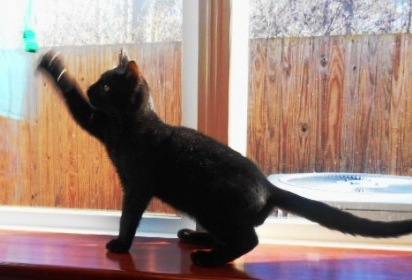
Play aggression usually only occurs in kittens. Kittens in the wild learn to hunt and to protect themselves by pouncing each other and anything that moves such as falling leavings and insects. While this is a natural part of being a kitten, it can be distressing when they pounce ankles. The most important thing with kittens is environmental enrichment (see this section). Vertical climbing surfaces, play with fishing pole toys and laser pointers for 10-15 min 2-3 times daily, and a variety of toys and scratching and climbing surfaces are important. This is the only condition, where actually adding another pet often helps as long as it is a kitten of a similar age and both kittens enjoy company of other kittens.
Aggression in adult and older cats:

Aggression (other than Play Aggression) in cats is usually related to underlying medical conditions, inadequate household environment, or changes in environment. In addition, aggression can be unknowingly reinforced by the family members.
Changes in environment:
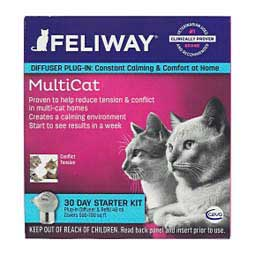
The environment in the wild changes slowly. Cats are not magically transported from one area to the other and are not suddenly locked in a small space with new animals or people. However, we expect that when we move or introducing new cats, new dogs, or new people our current cat(s) will just magically adjust. Because environments in the wild change slowly, changes at home are best accomplished slowly over weeks or months. When moving, this cannot be done as gradually as this. However, we can often simulate gradual changes. It is best to start with confining the pets for a few weeks then gradually letting them see the home. It is ideal to plug in Feliway (http://www.feliway.com/us/) to help anxiety as soon as one arrives to the new dwelling (or a week prior if possible). Care must also be taken to have enough hiding areas so the cats can get away if they want to be alone. Whenever there are changes, often more environmental enrichment and extra water bowls, food bowls, and litter boxes help.
Introducing or Re-Introducing Cats:
Research shows that the majority of cat owning households in the United States own more than one cat. This means, at some point two cats are introduced to each other. While two kittens adopted at the same time, even from different litters, often do excellent together, one adult cat and one kitten or two adult cats often have severe trouble being introduced. It is very important to take all introductions slowly. Often, the same advice needs to be followed if one cat was in the veterinary hospital for an illness or if one or more of the cats were boarded for any reason. Slow is the key word and slow means weeks or months not days.
When introducing kitties (or re-introducing), but the 2 cats in different rooms. Switch the blankets and toys and food & water bowls daily. Switch litter pans every few days between the kitties. They can only be introduced when the kitties are calm and quiet. DO NOT attempt until they are calm and not stressed. Remember from the chapter on Speaking Cat that the feline body language is critical in determining if a cat is stressed. After they have been calm for several days, you may feed each food or treats about 5-6 weeks away from each side of a door and open the door for a few seconds or minutes. The important thing with the short gradual introductions is that at no point when the cats see each other can they be stressed at all- not even tiny amount of stress. Once they are calm for 3-4 days in a row, the time may be gradually increased OR the distance may be decreased (do not do both at the same time). If they begin to show any signs of stress, stop and the next time increase the distance or decrease the time they are together. In addition, immediately after the sessions, play with each cat with a fishing pole toy or laser pointer or have petting sessions for at least 5 minutes per cat (if you have 2 humans and can do this at the same time that is even better). Remember to have patience and that this can take weeks or months.
Anxiety Causes Aggression:
It is important to remember that cats never want to be mean or hateful and that they do not get angry. They are anxious or fearful, not angry. It is also important to not feel guilty or stressed or angry or upset as this makes the situation worse. The more calm the pet parents are the more calm the cats will be.
Redirected Aggression:
Another cause of aggression is redirected aggression. In the wild, if a cat sees something that terrifies it the cat can either attack it and chase it off or the cat can run away. When cats are confined in a home they cannot make something terrifying go away and the cat cannot run away. If there is something that terrifies them and either the cat cannot make it go away (such as a cat or other animal outside a window, fireworks, construction noises) or they are threatened enough by it that they do not feel it is safe to chase it away (like a dog or a larger cat or a scary child), the cat will attack whatever is closest to them like another cat or human. What happens is there is something terrifying and the cat freaks out and needs to do something with their nervous energy so they just attack whatever they can get. If this occurs between two cats, one scary episode can make both cats scared of each other. The two cats may now avoid each other or attack each other.

The first thing to do is eliminate any stressed in the environment. Eliminate or drown out noises. Cover windows so they cannot see outside animals. Feliway Plug ins and Royal Canin Prescription Clam diet can help anxiety. See also the chapter on environmental enrichment as vertical climbing sources, adequate food and water bowls, toys, play times, and adequate litter boxes cannot be stressed. If there are two cats that now can no longer be friendly they may need to be gradually reintroduced to each other.